
Nearly one in four Americans report experiencing a significant bereavement in any given year, according to research published by the American Journal of Psychiatry — yet so many people grieve in quiet isolation, especially when the world around them seems to be celebrating. If you’ve lost someone dear and find yourself dreading the arrival of autumn, you’re not imagining things. The shift of seasons genuinely can deepen grief, and we want to offer something real and useful to help you move through it.
Fall is a season of sharp contrasts. There is undeniable beauty in it — the amber light, the smell of woodsmoke, the permission to slow down. But when you’re grieving, that same beauty can catch you off guard. A sudden gust of leaves can feel like a reminder of everything that’s gone. The cozy togetherness of the season can make loneliness feel louder. We see this every year with the families we serve, and we want you to know: what you’re feeling makes complete sense.
Why Autumn Hits Differently When You’re Grieving
Grief doesn’t follow a calendar, but our surroundings absolutely influence how we carry it. The shorter days reduce our natural light and can quietly drain our energy and mood. The cultural expectation of harvest joy and family warmth can make a bereaved person feel stranded on the outside of something everyone else seems to share.
There’s also the matter of memory. Fall is a season rich with sensory triggers — the scent of cinnamon, the sound of football on a television down the hall, the particular slant of October afternoon light. For someone who’s lost a parent, a spouse, or a child, those sensory details can resurrect grief with startling force.
That’s something we say often in our arrangements room, and we mean it. Tending to grief is not self-indulgence. It is necessary, humane work.
Gentle Ways to Care for Yourself This Fall
Step Outside, Even Briefly
Nature doesn’t demand anything from you. A quiet walk among the trees — even a short one — can interrupt the cycle of anxious, inward thinking that grief so often produces. The rhythm of your own footsteps, the cool air, the color overhead: these things gently remind your nervous system that the world is still here, still moving, and still capable of holding you.
Lean Into Small, Physical Comforts
This is not trivial advice. The body grieves alongside the mind, and it deserves attention. A warm mug of tea, a weighted blanket, a lit candle with a scent you love — these small acts of kindness toward yourself matter. They signal to your body that it is safe, even when your heart doesn’t feel that way yet.
Find People Who Will Sit With You in It
Grief support groups, whether in-person or online, offer something that well-meaning friends sometimes cannot: the presence of people who truly understand. Many hospices, hospitals, and faith communities offer free fall grief support programming. A therapist who specializes in bereavement can also make a meaningful difference. You don’t have to carry this season alone.
Give Yourself Unscheduled Time
Modern life pushes us to stay busy, and busyness is often held up as a sign of coping. It rarely is. Grief needs space. Give yourself hours — real, unhurried hours — to simply be. Read something that asks nothing of you emotionally. Sit in a quiet room. Let yourself feel without a plan for what to do with the feeling.
Try Expressing What Words Can’t Hold
Journaling, painting, sketching, working with clay — creative expression has a well-documented role in processing loss. You don’t need to be an artist. You need only a willingness to let something out. Many of our families have found that writing letters to the person they’ve lost — never meant to be shared — gives the grief somewhere to go.
Approach Traditions With Intention
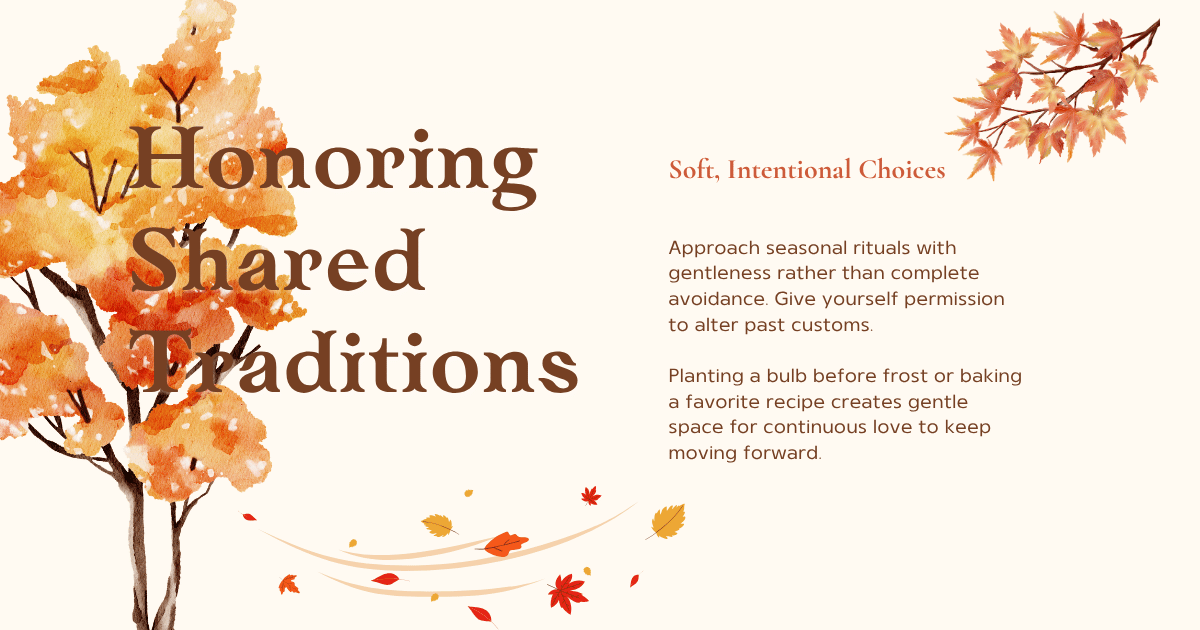
Fall is full of rituals, and some of them will feel impossible this year. That’s okay. But consider choosing one or two to approach gently rather than avoid entirely. You might bake something the person you lost always loved, or take a drive to see the foliage on a road you traveled together. You might also create a new ritual — lighting a candle on a certain evening, or planting something in their memory before the first frost. New traditions don’t replace the old ones. They simply make room for love to keep moving forward.
Carrying the Love Forward
The falling leaves don’t disappear — they return to the earth and become part of what allows new life to grow come spring. Grief, at its deepest, works something like that. The love doesn’t go anywhere. It changes form. It becomes part of how you see the world, how you treat the people around you, and who you are becoming.
This fall, whatever you’re carrying, we hope you find at least one moment of gentleness toward yourself. You are not alone in this season, and the love you’re grieving is proof of a life beautifully lived.
