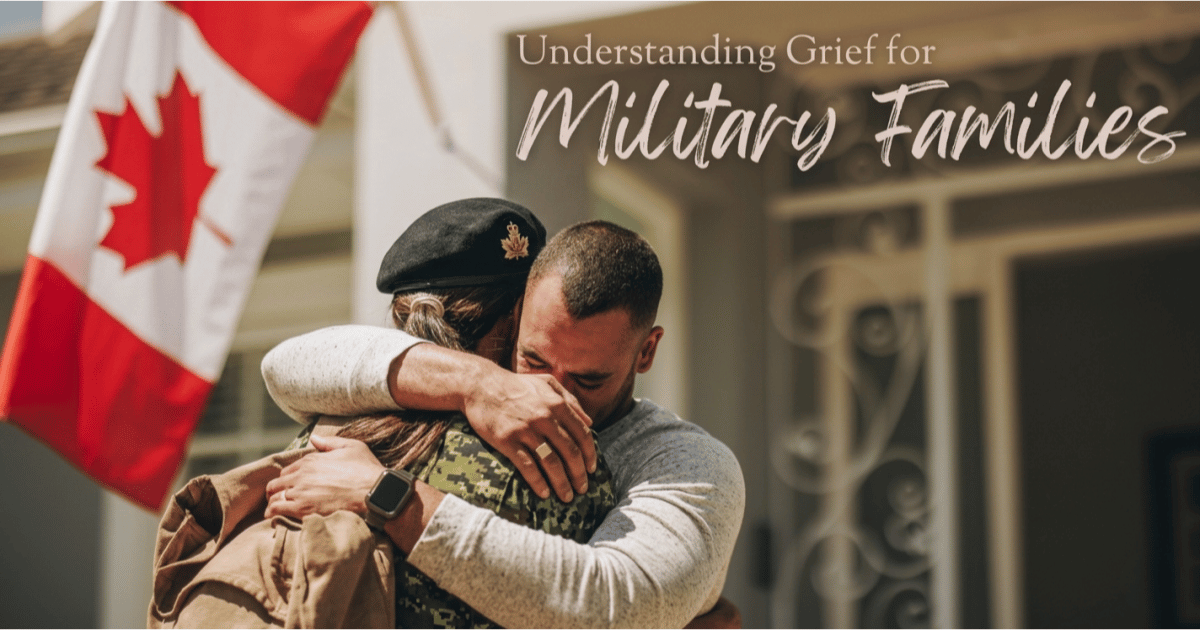
Navigating the Unique Journey of Loss
Whenever we lose a loved one, we grieve. However, surviving members of a military family often navigate a complex range of emotions if their loved one passes away while in service.
Serving in the Canadian Armed Forces carries inherent risks. Families are deeply aware of these risks from the moment their loved one enlists. Military casualties are typically sudden and frequently occur after long absences or multiple deployments. It is very common for surviving family members to have not seen their loved one for an extended period prior to their passing.
Because of these distinct circumstances, the emotions that follow can feel incredibly isolating.
Understanding Complex Emotions
Surviving family members often experience a conflicting mix of feelings. You may feel immense pride for your loved one’s service to Canada, while simultaneously feeling deep despair over your loss.
Anger directed at the military can surface, depending on how the death occurred. Conversely, some may feel a sense of relief because the constant worry over deployments is finally over. This relief can sometimes trigger feelings of guilt.
These emotions are challenging to process. Just like any form of grief, healing takes time. Fortunately, because other families have walked this path, a strong and understanding support network exists within the military community.
The Impact of Secondary Losses
As the grief journey begins, it can also manifest in physical ways. It is common to experience difficulty sleeping, loss of appetite, memory loss, and trouble concentrating. There are no shortcuts in the grieving process, and the timeline looks different for everyone.
Surviving family members often face secondary losses that alter their daily lives and relationships. It can become difficult to talk to other military families who have not experienced a loss, sometimes leading to feelings of resentment.
Eventually, if no other surviving family members are active in the Canadian Armed Forces, the family will have to transition out of military housing. This shift can compound the initial grief. It forces families to form new social connections and build a new identity separate from the military lifestyle.
Finding Support and Resources
Knowing where to turn for support can make a meaningful difference during this difficult transition. There are dedicated resources and support organizations available to Canadian military families.
For specialized grief resources and bereavement services, you can visit HOPE (Helping Our Peers By Providing Empathy) or learn more about the Military Family Services Program.
You can also contact our funeral home at any time. We are here to help guide you and connect your family with the local resources and support networks you need.
