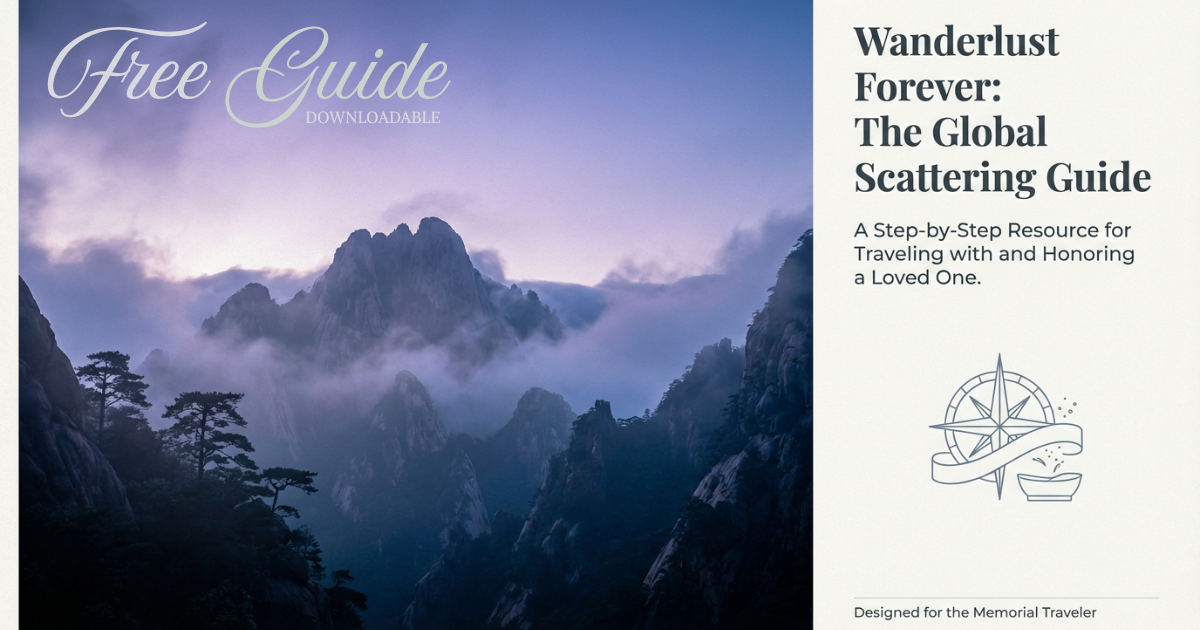
Choosing cremation offers a unique freedom: the ability to return a loved one to a place that truly captures their spirit. Whether it’s a favorite mountain peak, a quiet forest in a national park, or a meaningful international destination, the journey to a final resting place is a powerful act of love. However, traveling with remains and planning a ceremony in protected lands requires careful preparation.
To help you navigate this process with peace of mind, we created Wanderlust Forever: The Global Scattering Guide for the “Memorial Traveler.” Here are the key highlights you need to know.
Taking Flight: The “X-Ray” Rule for Urns
If your plans involve air travel, your first priority is the security checkpoint. The Transportation Security Administration (TSA) cannot open an urn out of respect for the deceased, which means they must be able to see through the container using X-ray technology.
To ensure a smooth journey, choose a travel-friendly urn made of wood, plastic, or high-density cardboard. Dense materials like metal, lead-lined ceramic, or thick marble will appear opaque on the scanner and may be denied boarding. We always recommend keeping the remains in your carry-on luggage to prevent loss and carrying certified copies of the death and cremation certificates.
Honoring the Land: Scattering in National Parks
The national parks offer stunning backdrops for a final farewell, but they are protected ecosystems with strict rules. Most parks require a “Special Use Permit” that should be requested at least a few weeks in advance.
The golden rule is “Leave No Trace.” To keep these lands pristine, you must typically scatter at least 100 to 200 feet away from trails, roads, and water sources. While it’s tempting to leave a physical marker or flowers, park regulations strictly prohibit any monuments, plaques, or even biodegradable tributes like rose petals to ensure the site remains in its natural state.
Global Considerations
If your journey takes you across international borders, the rules can change significantly. While countries like the United Kingdom are relatively permissive, others, such as Germany, have strict laws requiring remains to be interred in a designated cemetery. Before you book your flight, check with the destination country’s consulate to see if you need special import permits or translated documentation.
The Virtual Headstone: GPS and Technology
Since you cannot leave a physical marker in a wilderness area or the open ocean, many families are turning to technology. Using GPS tagging or apps like “what3words,” you can record the exact coordinates of a scattering spot. This creates a “virtual headstone” on a digital map, allowing future generations to “visit” the exact location or even find their way back to that specific meadow or coastline years later.
A Beautiful Hybrid: Cemetery Scattering Gardens
For those who want the beauty of a natural setting but the permanence of a traditional memorial, scattering gardens are an excellent option. These dedicated areas within a cemetery are professionally maintained and provide a permanent legal record of the location. Many gardens feature memorial walls or plaques, giving you a physical place to return to for reflection without the maintenance of a traditional burial plot.
Planning a memorial journey is a significant undertaking. Our full guide provides more detailed checklists, airline-specific tips, and a breakdown of park-specific rules to ensure your loved one’s final journey is as seamless as it is meaningful. Download your free copy below.
