When “No Funeral” Still Needs a Plan
Chances are you’ve heard someone say it—maybe you’ve said it yourself. “When I go, just don’t make a big deal out of it.” Or the classic: “Throw me in a pine box and move on.” It’s one of the most common things people express when the subject of end-of-life planning comes up, and honestly, the feeling behind it makes complete sense.
Nobody wants to picture their loved ones sitting stiffly in folding chairs while organ music plays and a stranger says words that don’t quite fit. Nobody wants to be the reason their family spends money they don’t have on flowers that will wilt in three days. That instinct to wave it all away? It’s not selfishness. It’s love, and it’s a reasonable reaction to traditions that haven’t always felt personal or meaningful.
But here’s where it gets complicated: saying “do nothing” isn’t actually a plan. And without a plan, the people you care about most are left holding all the decisions—at the worst possible moment.
The Unintended Weight of “Don’t Bother”
When grief arrives, it arrives with force. Even when a death is expected, the days immediately after are disorienting in ways that are hard to describe until you’ve lived through them. People who are grieving naturally look for a container—something structured that gives them permission to gather, to cry together, to tell stories, to feel less alone in what they’re carrying.
When a loved one has left behind no instructions or preferences, well-meaning family members can find themselves paralyzed. Someone wants to plan a gathering but worries it would go against Mom’s wishes. Someone else quietly needs a moment of collective acknowledgment but feels guilty for wanting it. Siblings disagree. Time passes. The moment slips away, and some family members are left with grief that never quite found a place to land.
Saying “I don’t want a funeral” is often less about refusing to be remembered and more about refusing to be remembered badly—in a way that feels stiff, impersonal, or disconnected from who you actually were.
The real gift you can give the people who love you isn’t silence on the subject. It’s direction. Even a little bit of it changes everything.
A Gathering Doesn’t Have to Look Like a Funeral
Here’s the reframe that matters: a funeral is just one version of a goodbye. It happens to be the version most of us grew up seeing, so it’s the one we imagine when we say we don’t want one. But it is far from the only option.
What families actually need isn’t a formal service with a casket and a guest book. What they need is a reason to come together, a shared story, and a moment that feels true to the person they lost. That can take almost any shape.
- A bonfire on the beach with craft beer, a curated playlist, and an open invitation to anyone who loved you.
- A backyard dinner party built around your favorite recipes, where the table talk naturally turns to memory and laughter.
- A hike to a meaningful spot followed by scattering ashes and an afternoon of storytelling.
- A simple direct cremation handled quietly, with a private family toast scheduled weeks or months later, when everyone is ready.
- A gathering at a local brewery, park, or community space—anywhere that actually reflects how you lived.
None of these are funerals in the traditional sense. All of them give grief somewhere to go.
How to Actually Leave That Direction
You don’t need to plan every detail. You don’t need to fill out official documents, though writing things down formally and sharing them with someone you trust is always a good idea. You just need to shift your message from “don’t do anything” to something with a little more shape.
Start by thinking about what you actually want people to feel. Relieved that your life was full? Connected to each other? Free to laugh? That feeling becomes the compass for whatever gathering your family designs.
Then think about what would feel true to who you are:
- Is there a place that matters to you?
- Is there music that fits your life better than a hymn?
- Is there food, a drink, a ritual that would make people smile and say, “That is so them”?
- Are there people you’d want in the room—or a room you’d want them to skip entirely in favor of something more casual?
You don’t have to answer all of those questions. Even answering one of them out loud—or writing it in a note tucked somewhere findable—gives your family something to hold onto.
This Is About Them as Much as It’s About You
Most people who say they don’t want a funeral are genuinely trying to make things easier for the people they’ll leave behind. The intention is kind. But a complete blank slate rarely feels like a gift when the time actually comes.
Taking even a small amount of ownership over your exit plan—whatever form that takes—is one of the most thoughtful things you can do. It lifts the guesswork. It gives your family permission to gather without guilt. And it means that whatever happens after you’re gone carries at least a trace of you in it.
That’s not a funeral. That’s just love, with a little bit of planning behind it.
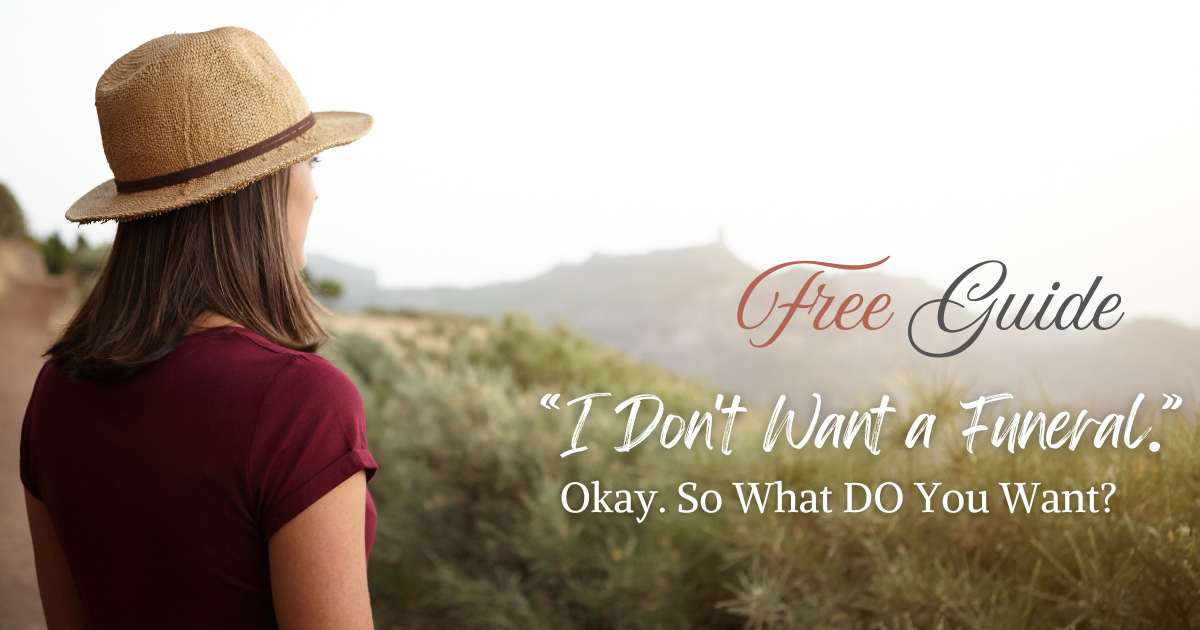
Free guide: If you would like a little more help with this topic, our free guide, “I Don’t Want a Funeral.” Okay. So What DO You Want?, offers practical information you can keep and refer back to as you make decisions.
