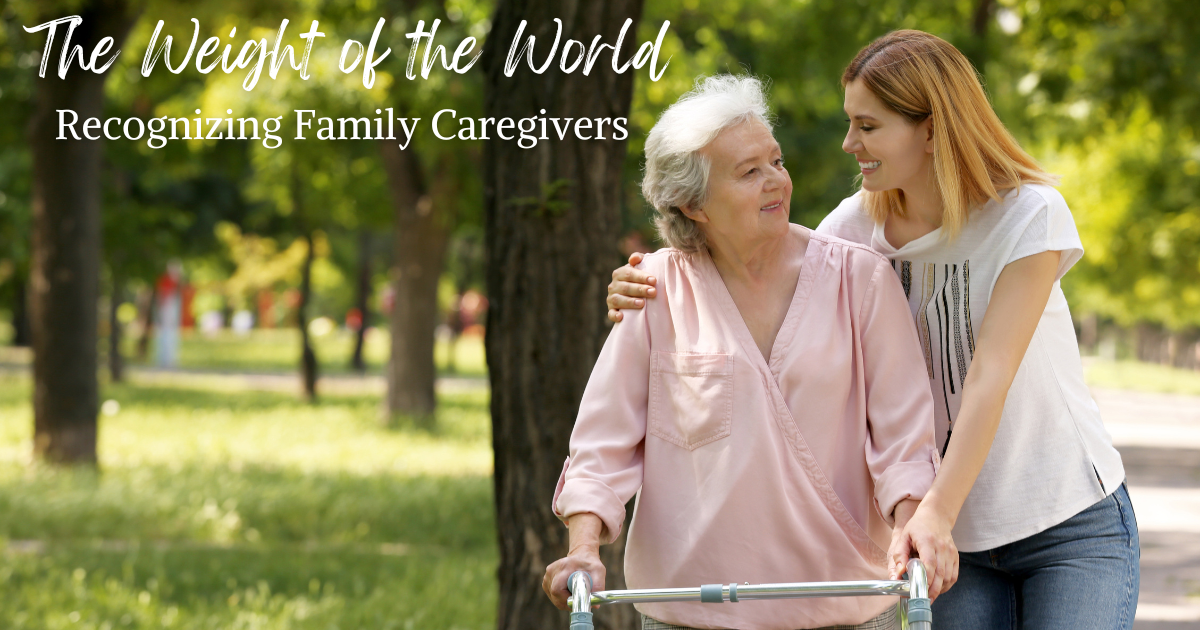
Nearly 53 million Americans are providing unpaid care to an adult or child with special needs, according to the National Alliance for Caregiving and AARP — and the vast majority of them are doing it quietly, without recognition, and often without any help at all. November is National Family Caregivers Month, and we want to use this space to speak directly to those people: to name what they carry, to offer some concrete support, and to remind them that they are not invisible to us.
In our work, we sit with families at the end of a long caregiving road. We hear their stories. And one thing we know with certainty is that caregiving is one of the most profound, exhausting, and love-filled things a human being can do.
The Weight That Goes Unseen
From the outside, caregiving can look like a series of practical tasks — managing medications, scheduling appointments, helping with bathing and dressing, preparing meals, handling finances. And yes, it is all of those things. But anyone who has lived it knows it is also something far more consuming than any task list can capture.
It is being woken at 2 a.m. by a fall you somehow have to manage alone. It is sitting in a waiting room for the fourth time this month, running through a mental checklist of everything that still needs to happen at home. It is smiling through your own grief because you don’t want your loved one to see how frightened you are. It is the particular loneliness of being surrounded by need and still feeling completely unseen.
That cost is real and measurable. Caregivers experience higher rates of depression and anxiety than the general population. Many reduce their work hours or leave their careers entirely, creating financial strain that compounds the emotional toll. Social connections shrink as time and energy disappear. And because caregivers are so focused on someone else’s wellbeing, their own health quietly deteriorates — skipped doctor’s appointments, poor sleep, meals grabbed between tasks.
None of this is weakness. It is what happens when someone gives everything they have, for as long as they can, without enough support.
You Are Allowed to Need Help
One of the hardest things for caregivers to do is ask for help — or even admit they need it. There is often a quiet guilt attached to the idea of stepping away, even briefly. But caring for yourself is not a betrayal of the person you love. It is how you stay present for them.
If you are in a caregiving role right now, here are some resources worth knowing about:
- Caregiver Support Groups: Local and online groups offer a space to speak honestly with people who truly understand. There is something deeply relieving about not having to explain yourself from the beginning.
- Respite Care: Temporary relief — whether for a few hours or a few days — gives caregivers a chance to rest, recover, and return with more to give. Adult day programs and in-home respite services are available in most communities.
- Government Programs: Medicare and Medicaid both offer services that can reduce the burden on family caregivers, including home health aides, adult day services, and case management support. Eligibility varies, but it is worth exploring.
- Nonprofit Organizations: The Family Caregiver Alliance and the National Alliance for Caregiving both provide excellent guidance, resource locators, and direct support for families navigating this road.
What the Rest of Us Can Do
If someone in your life is caring for a parent, a spouse, a sibling, or a child with serious health needs, they probably won’t ask you for help. Not because they don’t need it, but because they’ve gotten used to doing it alone, and because asking feels like one more thing to manage.
So don’t ask. Just show up. Bring a meal without being invited. Offer to sit with their loved one for two hours so they can sleep. Handle an errand they’ve been putting off. Send a text that simply says, “I see how hard you’re working.” These small acts cost very little. To a caregiver running on empty, they can mean everything.
When Caregiving Comes to an End
We also want to gently acknowledge something that often goes unspoken: caregiving eventually ends, and that ending brings its own complicated grief. Some caregivers feel relief alongside their sorrow, and then feel guilty for the relief. Some feel lost without the structure and purpose that caregiving gave their days. Some grieve not only the person they lost, but the years of their own life that caregiving quietly consumed.
All of that is real. All of it is normal. And all of it deserves the same compassion we extend to any form of grief.
To every caregiver reading this — whether you are in the thick of it right now, or you are standing on the other side — we see you. What you have done, and what you continue to do, is an act of love that leaves a mark on the world in ways you may never fully know.
