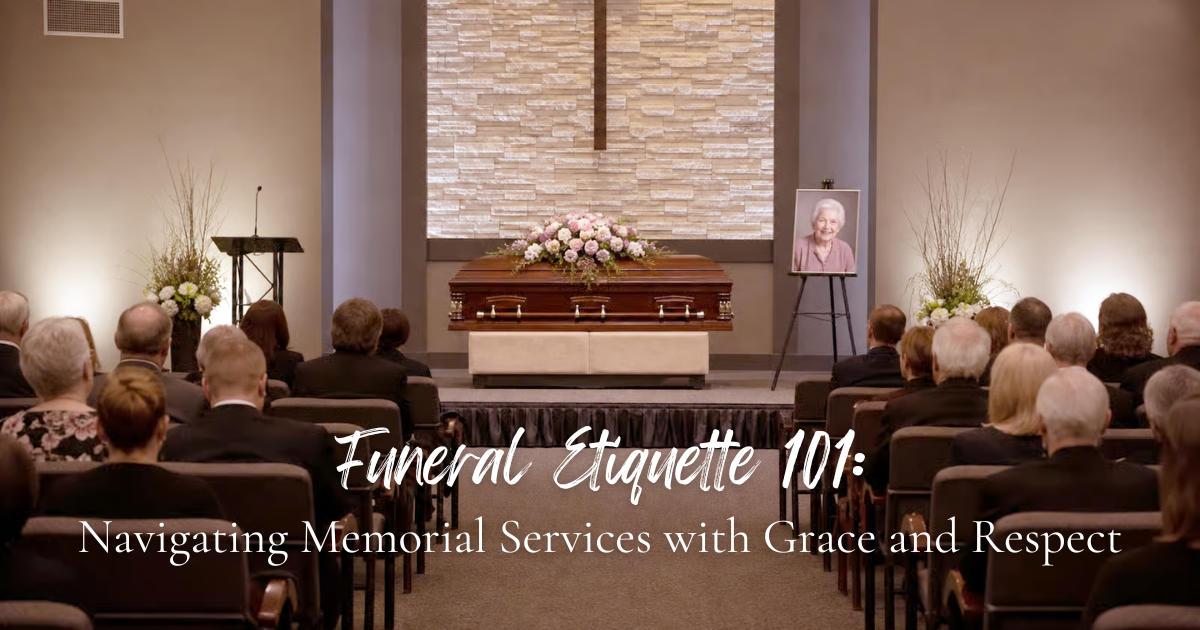
Roughly half of all families in the United States now choose a memorial service — sometimes weeks or even months after a loved one has died — rather than a traditional funeral, according to the National Funeral Directors Association. If you’ve been invited to one recently, you may have found yourself wondering exactly what’s expected of you. The truth is, most people attending a memorial service simply want to do right by the family, and that instinct alone goes a long way. What follows is our honest, practical guidance — the same things we tell our own families here every day — on how to attend, and how to plan, a memorial service with genuine care.
What Makes a Memorial Service Different
A memorial service typically takes place without the body present, which gives families more flexibility in timing, location, and tone. It might be held in a funeral home, a park, a family home, or a house of worship. It might feel solemn, or it might feel more like a celebration of life. That range of possibility is one of the beautiful things about memorial services — but it can also make people unsure how to behave. The short answer: follow the family’s lead, and lead with kindness.
Planning a Service That Truly Reflects a Life
If you’re the one doing the planning, the most important thing we can tell you is this: center the person, not the protocol. Think about who your loved one actually was — their humor, their passions, the music that moved them — and let that shape the service.
- Religious settings: If the service will be held in a church, temple, mosque, or other house of worship, speak early with the religious leader. They can help you weave in meaningful traditions while honoring the faith community’s customs.
- Non-religious settings: A secular space gives you tremendous freedom. Personal readings, a favorite playlist, a slideshow, an open microphone for stories — all of these can create something deeply moving and entirely one-of-a-kind.
- Hybrid approaches: Many families blend elements — a brief spiritual reading alongside a very personal eulogy, for example. There is no wrong combination if it honestly reflects the person you’re remembering.
How to Be a Thoughtful Attendee
Arrive a Little Early
We always suggest arriving at least fifteen minutes before the service begins. This gives you time to find a seat calmly, sign the guest register if there is one, and offer a quiet word to the family before things get underway. Slipping in late — even unintentionally — can pull attention away from the service at a tender moment.
Keep Your Condolences Warm but Brief
When you reach the family, a simple “I’m so sorry. She meant a great deal to me” is enough. Grieving families are holding themselves together while greeting many people at once. You don’t need to fill the silence or share the full story of your connection right then. Save longer conversations for after the service, when the pressure has lifted a little.
Be Present During the Service Itself
Silence your phone completely — not just to vibrate. Avoid side conversations, and resist the urge to scroll. The family will notice who was genuinely present, even if they never say so. Eating and drinking during the service should be avoided unless refreshments are specifically part of the program.
Think Carefully About Young Children
Unless the family has indicated the service is child-inclusive, it’s often kinder to arrange care for very young children. Not because children don’t belong in grief — they absolutely do — but because a toddler who can’t sit quietly shouldn’t have to, and a grieving family shouldn’t have to worry about it either.
Stay and Connect Afterward
If there is a reception or gathering after the service, please stay if you’re able. Sharing a memory over a cup of coffee, laughing about something the person would have found funny, sitting quietly with someone who is struggling — these moments are often where the real comfort happens. Community is a form of care.
The Place of Flowers and Other Gestures
Sending flowers to the funeral home or to the family’s home before the service is a time-honored and genuinely comforting gesture. Flowers do something that words sometimes can’t — they fill a room with warmth and beauty at a moment when everything can feel stark and heavy. A plant, particularly a perennial or something that can be placed in a garden, offers a living reminder that endures long after the service itself.
If the family has requested donations to a charity in lieu of flowers, honor that wish. It’s another way of saying: I see what mattered to them, and I want to carry it forward.
At the end of the day, memorial service etiquette comes down to one thing — making the people who are grieving feel a little less alone. You don’t have to say the perfect words or follow every rule flawlessly. Showing up, being present, and leading with love is almost always enough.
