Every October, front lawns across America sprout plastic tombstones and papier-mâché skulls — a lighthearted nod to mortality that most of us walk past without a second thought. But those Halloween displays quietly raise a question we hear more often than you might expect: Is that supposed to be a cemetery or a graveyard? Most people use the two words as if they mean the same thing, and honestly, in everyday conversation, that’s fine. But the distinction is real, rooted in centuries of history, and once you understand it, you’ll never look at a church lawn — or a sprawling memorial park — quite the same way again. We’d like to walk you through it.
Where It All Began: The Origins of Graveyards
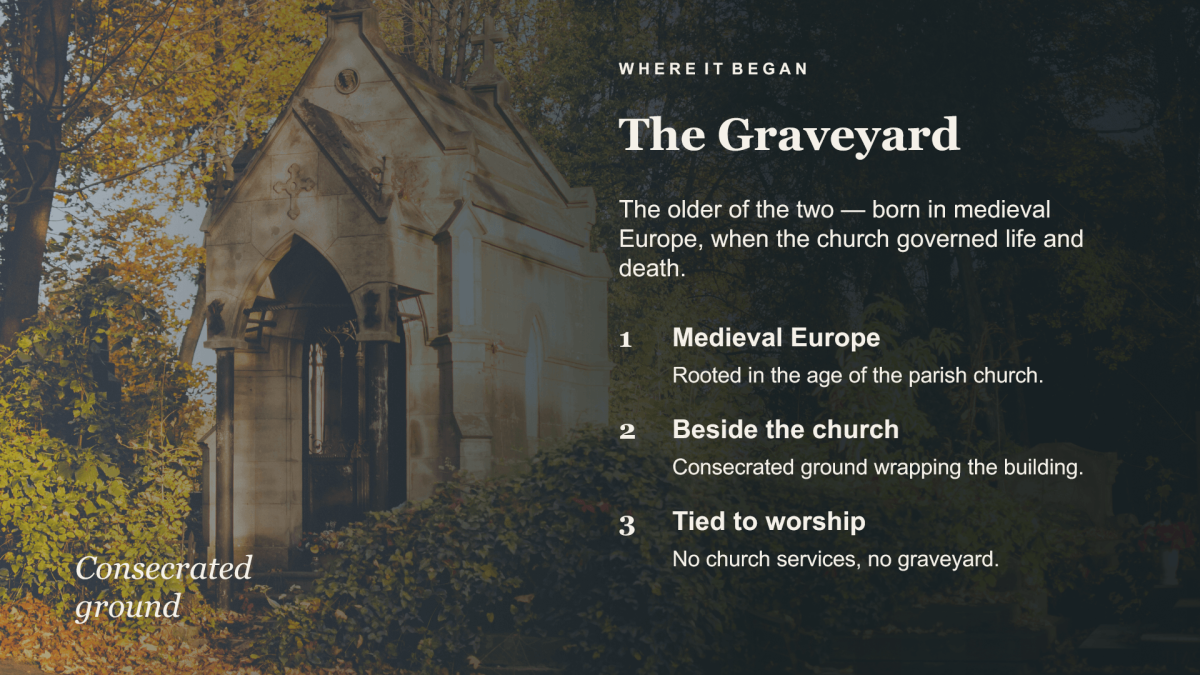
Graveyards are the older of the two, born in medieval Europe at a time when the church governed almost every aspect of life — and death. The most prominent members of a community were often buried inside the church itself, sometimes in crypts beneath the stone floors. Those of somewhat lesser standing were laid to rest just outside, in the enclosed land surrounding the building. That plot of consecrated ground attached to a church became what we now call a graveyard.
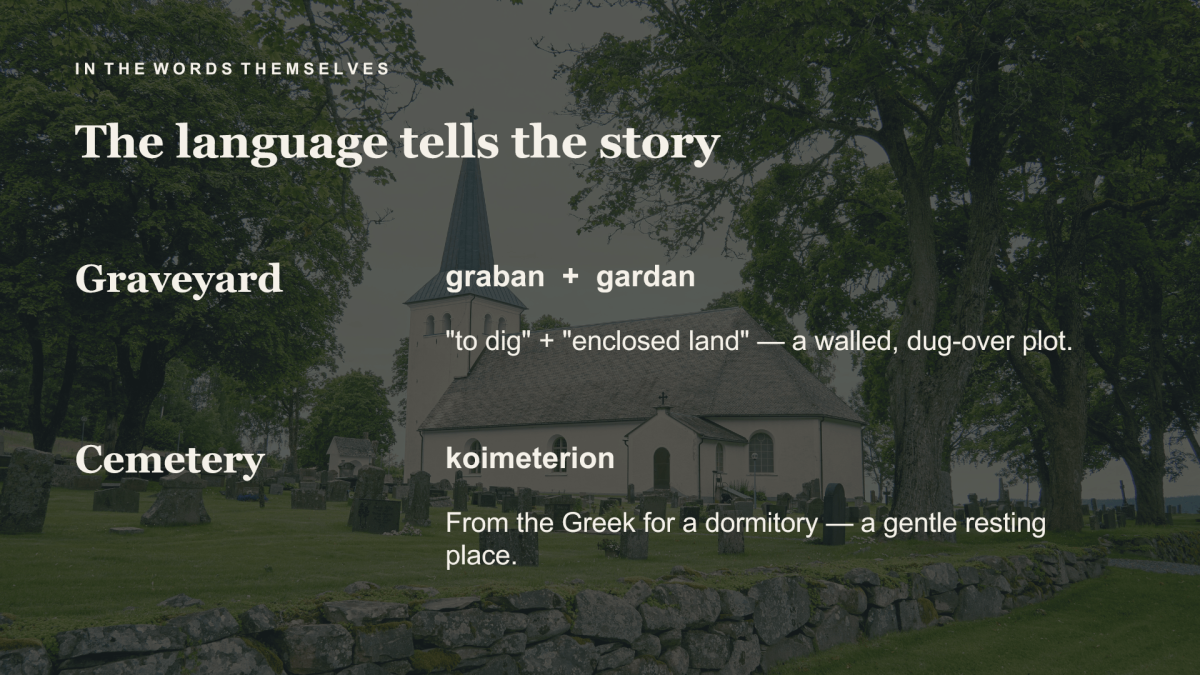
The word itself traces back to two proto-Germanic roots: graban, meaning “to dig,” and gardan, meaning “enclosed land.” Even the language tells you exactly what a graveyard is — a dug-over, walled-in piece of earth tied completely to the church beside it. If a church no longer held services, its graveyard typically fell into disuse as a burial ground as well. The two were inseparable.
A Modern Solution: How Cemeteries Came to Be
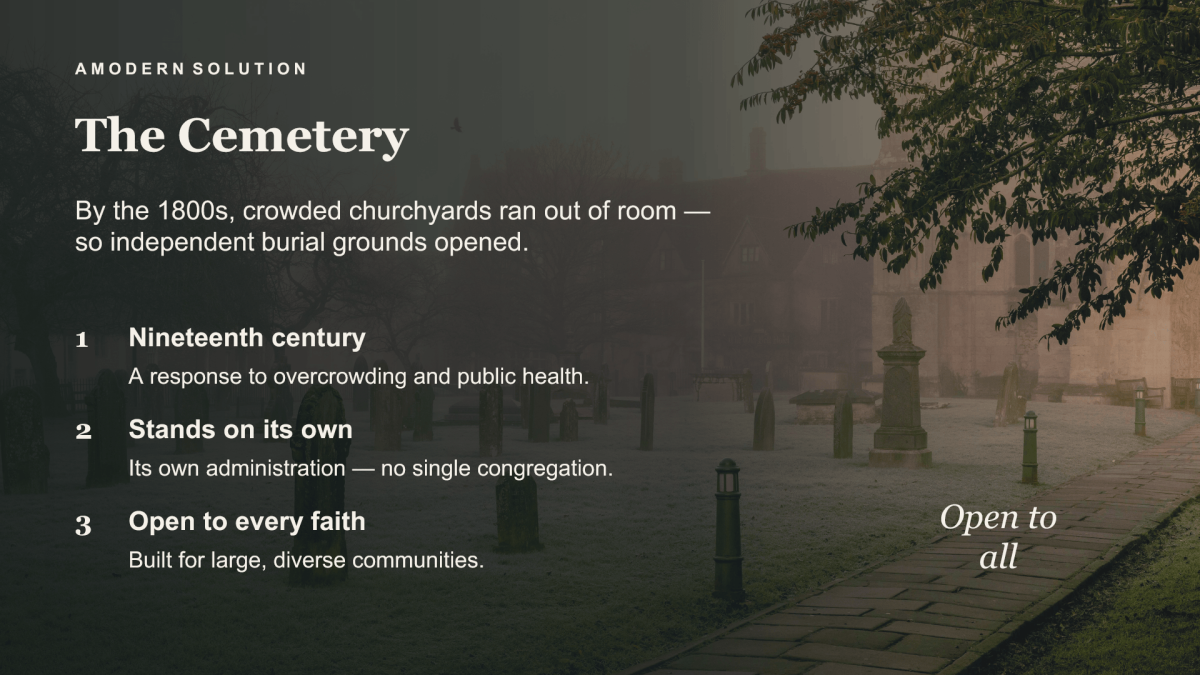
By the early nineteenth century, rapidly growing cities had pushed churchyards to their limits. Parishes simply ran out of room. Public health concerns about overcrowded burial grounds became serious enough that independent, non-denominational burial spaces began opening across Europe and America. These were cemeteries — and the difference was profound.
The word “cemetery” comes from the Greek koimeterion, meaning a dormitory or resting place. Early Christians embraced the term deliberately, leaning into the gentler image of eternal sleep rather than the finality of a grave. A cemetery answers to no single congregation. It is open to people of all faiths and none, governed by its own administration, and designed from the outset to accommodate large and diverse communities.
The Clearest Distinction: Location and Affiliation
If you want a simple rule to carry with you, here it is:
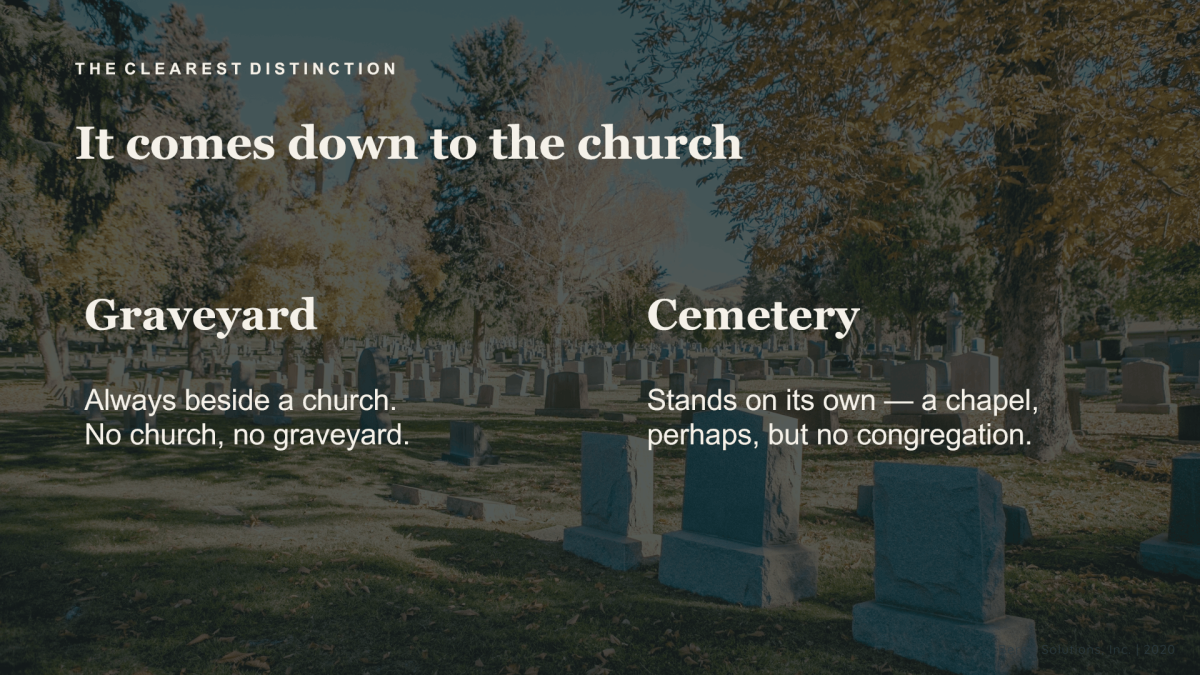
- A graveyard is always beside a church. No church, no graveyard. The two are physically and spiritually attached.
- A cemetery stands on its own. It may have a chapel on the grounds, but it is not administered by a church and is not restricted to any one faith community.
This is why older graveyards tend to be small and intimate — they were only ever meant to serve one congregation in one neighborhood. Cemeteries, by contrast, were planned with growth in mind. Arlington National Cemetery in Virginia, for instance, spreads across more than 600 acres and holds the remains of veterans from every American war. No churchyard could ever do that work.
What They Look and Feel Like
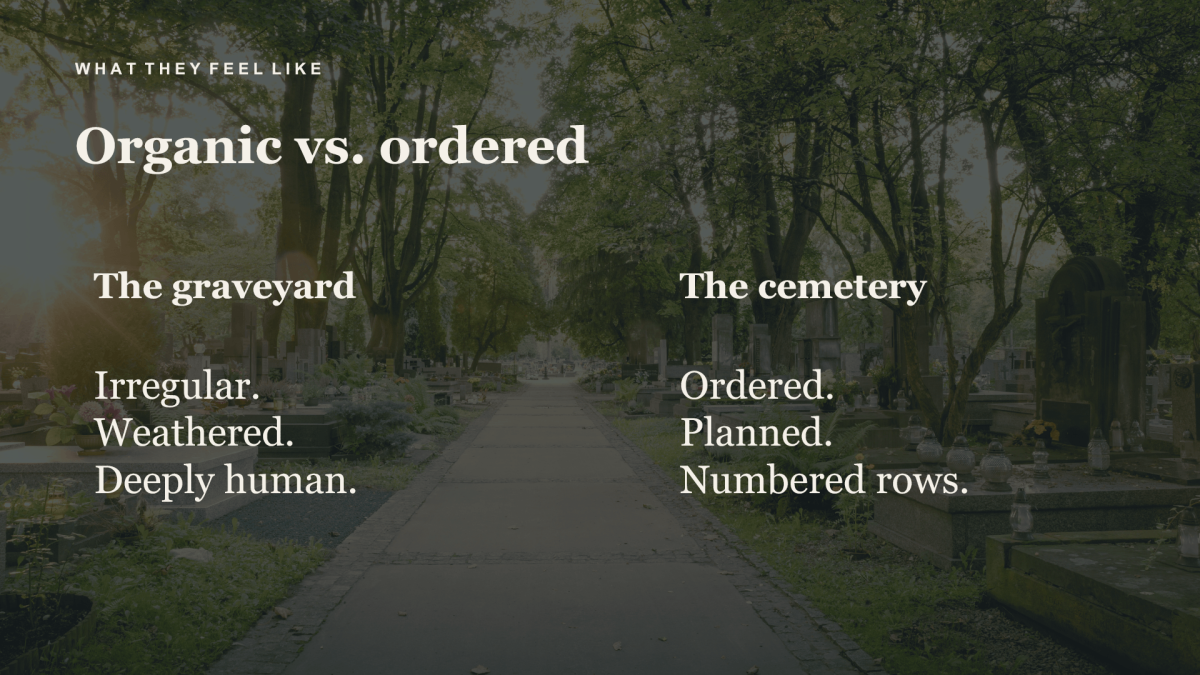
The visual difference is just as telling as the historical one. Walk through an old graveyard — say, behind a centuries-old New England meetinghouse — and you’ll notice the irregularity of it. Stones lean at odd angles, worn smooth by rain and time. Some are slate, some marble, some simple fieldstone. The inscriptions are personal, sometimes poetic, occasionally heartbreaking. The whole place feels organic, accumulated, deeply human.
A cemetery tends toward order. Rows of markers follow careful plans. Sections are numbered. Avenues have names. There are often dedicated areas for veterans, for children, for specific religious traditions within the larger nonsectarian space. That orderliness isn’t coldness — it reflects the practical reality of caring for thousands of families across generations while still honoring each one individually.
Why Any of This Matters Beyond Halloween
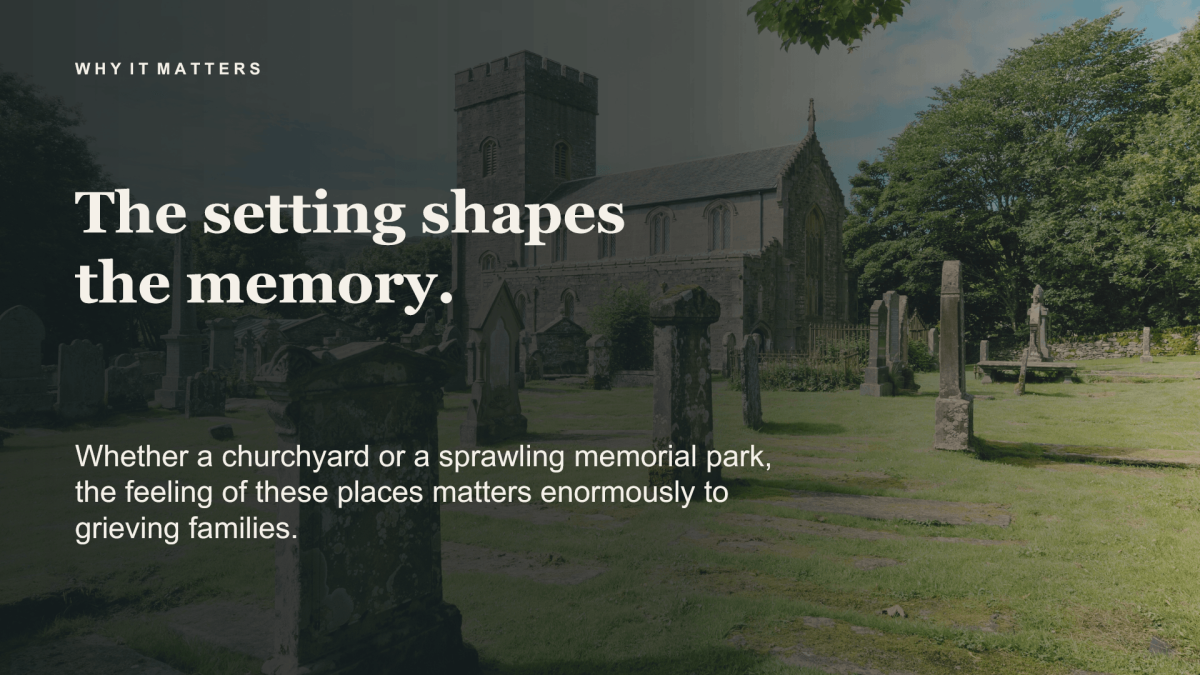
We think about these places differently than most people do, because we spend so much of our lives in them — walking them with families, helping choose gravesites, standing quietly at graveside services. Whether a family lays their loved one to rest in a small churchyard graveyard or a sprawling memorial park, what we’ve noticed is that the feeling of those places matters enormously to grieving people. The setting shapes the memory.
So when October rolls around and the plastic tombstones go up, we don’t mind a bit. If anything, we’re glad people are thinking — even playfully — about the places where the dead are held and remembered. Those grounds, whether graveyard or cemetery, are never really silent. They carry the full weight of the lives once lived, and the love that outlasted them.
