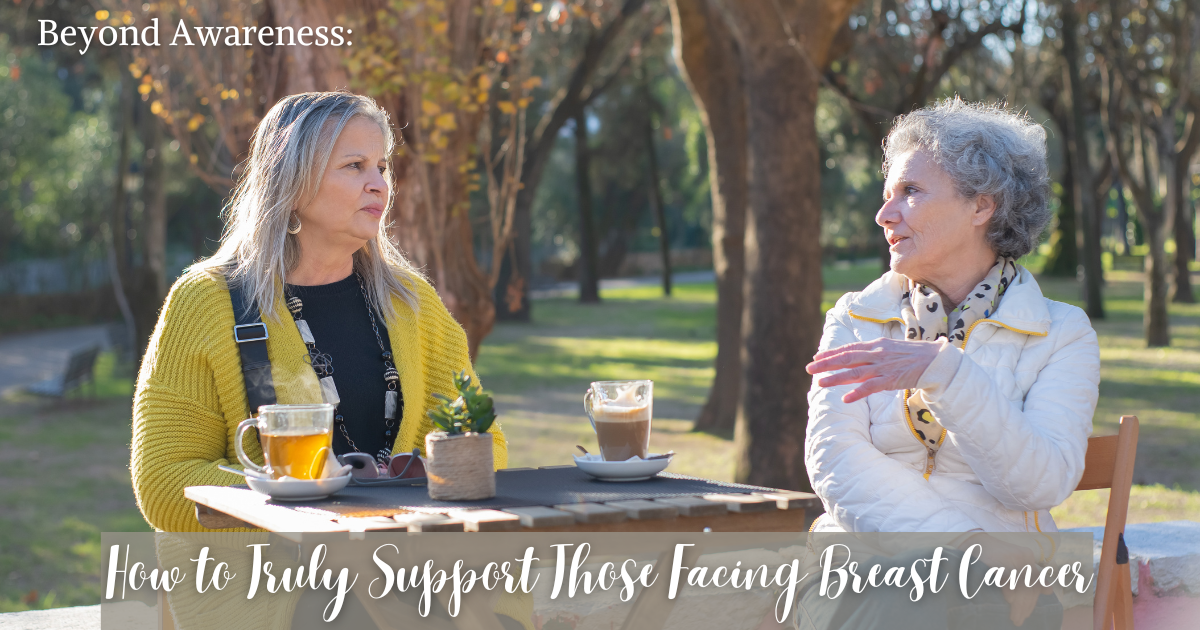
Breast cancer remains the most commonly diagnosed cancer among American women — the American Cancer Society estimates that roughly 1 in 8 women in the United States will develop invasive breast cancer over the course of her lifetime. That number means almost all of us have felt this disease’s reach in one way or another: a mother, a sister, a closest friend, a neighbor who brings in our mail. October’s Breast Cancer Awareness Month asks us to pause and sit with that reality. But awareness alone doesn’t hold a hand in a treatment waiting room or take the dog out on a hard morning.
Practical Help Matters More Than You Know
One of the most common things we hear from families navigating serious illness is that they didn’t want to ask for help — they didn’t want to be a burden. That’s exactly why the most generous thing you can offer is something specific, not “let me know if you need anything.” Those words, however kind, put the labor back on the person who is already exhausted.
Think about the quiet logistics of a life in treatment and offer to step into them:
- Drive children to school, practice, or appointments
- Pick up groceries, prescriptions, or dry cleaning
- Walk the dog or care for other pets
- Prepare and drop off a meal — and coordinate with other friends so there’s no Tuesday flood of casseroles and then nothing for two weeks
- Help with laundry, vacuuming, or yard work
- Sit with them at a chemotherapy or radiation appointment so they’re not alone
Equally important: keep showing up. The casseroles tend to arrive in the first two weeks, and then life moves on for everyone except the person in treatment. A phone call six weeks in, a grocery run three months in — those gestures can feel even more meaningful because they’re unexpected.
The Gift of Being Truly Heard
Sometimes the most powerful thing we can offer is simply our presence and our silence. Not advice. Not silver linings. Not stories about someone else’s cousin who beat the same diagnosis. Just genuine, unhurried attention.
Ask how they’re really doing, and then wait. Let the conversation go wherever it needs to go — to fear, to anger, to dark humor, to hope, to ordinary complaints about the weather. Following their lead rather than steering the conversation toward comfort is one of the most loving things a person can do.
Small Gestures That Carry Real Weight
Grand gestures are lovely, but it’s often the quiet, thoughtful ones that a person remembers years later. A handwritten card that arrives on a random Wednesday. A care package assembled with actual attention — a soft blanket, a calming lotion, a book they mentioned once, their favorite candy. These things say: I was thinking about you specifically, not just about cancer in general. That distinction matters deeply to someone who can feel reduced to their diagnosis.
Laughter matters too, and don’t be afraid of it. If your friend has always appreciated a sharp sense of humor, don’t suddenly tiptoe around them. Share the funny video, revisit an old inside joke, watch something ridiculous together. Joy is not disrespectful in the presence of illness — it’s often exactly what someone needs to feel like themselves again.
Supporting the Cause Itself
If you want to do more broadly, there are meaningful ways to channel that impulse. Donating to organizations that fund research, cover treatment costs for underinsured patients, or provide practical support services can make a lasting difference. Look for charities with strong accountability ratings — sites like Charity Navigator can help you find organizations where your donation does the most good.
Volunteering locally — whether at a cancer resource center, a hospital, or a community fundraising event — is another way to turn feeling helpless into something useful. Even a few hours can matter to the people those organizations serve.
Honoring Those We’ve Already Lost
For many of us, Breast Cancer Awareness Month isn’t about prevention or advocacy in the abstract — it’s about grief. We’ve already lost someone. If that’s where you are, know that honoring their memory by supporting others in treatment is one of the most beautiful ways to keep their spirit present in the world. A donation in their name, a walk done in their memory, or simply bringing your hard-won compassion to a friend who is facing what your loved one once faced — all of it counts. All of it matters.
Breast cancer is a disease that asks enormous things of the people who face it. What we can offer in return — our time, our presence, our willingness to show up again and again — may feel small to us, but to someone in the middle of it, it can feel like everything.
