When a Child Dies of Cancer: Supporting Every Corner of the Family
Childhood cancer claims the lives of roughly 1,500 children in the United States every year, according to the American Cancer Society — and behind every one of those numbers is a family whose world has been permanently rearranged. The grief that follows is not a single experience shared equally around the dinner table. It splinters. It moves differently through a mother than a father, differently through a ten-year-old sibling than a grandmother who has outlived her grandchild. In our work, we sit with all of those people — and we have learned that truly supporting a family means seeing each one of them.
This is what we want to talk about today: not just the parents at the center of the storm, but everyone else in that house, that family tree, that circle of love. Because grief, when a child dies of cancer, is a family-wide wound — and it deserves family-wide care.
The Parents: Carrying the Heaviest Weight Together, Alone
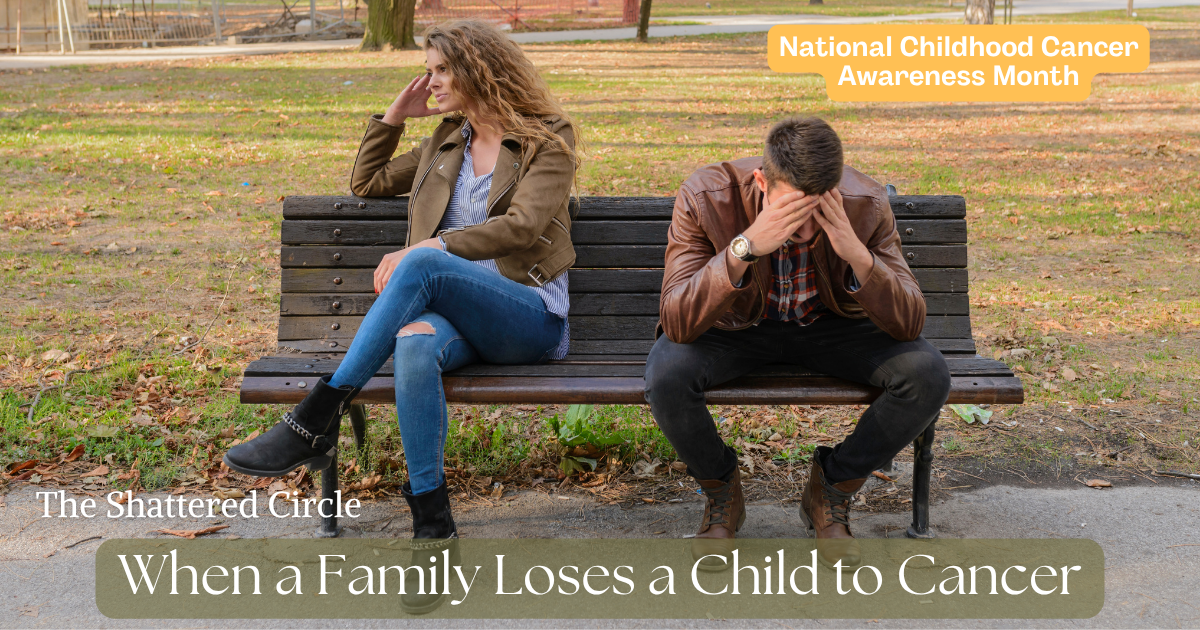
There is a painful truth we witness often, and it is this: two parents can love the same child completely and still grieve in ways that make them feel like strangers to each other. One parent may need to talk constantly. The other goes quiet. One returns to work within weeks; the other cannot get out of bed. Neither is wrong. Neither is broken. They are simply human.
When a child dies after a long illness like cancer, parents often carry an additional layer of exhaustion that the world rarely sees. They have already been grieving for months or years — through diagnoses, treatments, setbacks, and hope repeatedly made and unmade. By the time we meet them, they are not just bereaved. They are depleted in a way that cuts to the bone.
The most helpful thing anyone can do for grieving parents in those early weeks is remove decisions wherever possible. Bring food without asking. Handle one logistics call. Sit with them without needing to fill the silence. Grief counselors who specialize in child loss — can provide long-term support that friends and family, however loving, simply cannot sustain alone.
The Siblings: The Ones We Forget to See
Brothers and sisters may be the most quietly forgotten grievers in the house. They have lost their sibling — sometimes a best friend, sometimes a complicated relationship they will never get the chance to repair. And yet, because children are resilient-looking, because adults are overwhelmed, because siblings tend to go small and still when the adults around them are falling apart, their grief often goes unnamed.
Children grieve differently at different ages, and their understanding of death shifts as they grow. A seven-year-old may seem fine one afternoon and then ask a devastating question at bedtime. A teenager may show nothing at school and then shatter at home. Both are normal. What they need most is permission — permission to feel sad, confused, angry, even relieved if the illness was long and frightening. They need adults who will tell them the truth in age-appropriate ways and check in on them not just once, but over months and years.
Practical ways to support grieving siblings include:
- Keeping their routines as stable as possible in the early weeks
- Letting them participate in memorial planning in whatever way feels right to them
- Finding a grief group specifically for children, such as those offered by many hospice organizations
- Watching for signs of prolonged withdrawal, declining school performance, or physical complaints, which can all signal complicated grief
- Speaking the deceased child’s name openly at home — silence does not protect; it isolates
The Grandparents: Grieving Twice Over
We think often about the grandparents who come through our doors after a grandchild dies. They are grieving the child they adored — and they are watching their own son or daughter shatter, and they cannot fix it. That double helplessness is its own specific kind of anguish, and it rarely gets acknowledged.
Grandparents from older generations are also more likely to grieve privately, to hold themselves together for the sake of everyone else, and to quietly believe that their loss is secondary. It is not. Their pain is real and deserves direct recognition. A simple “I know you’re hurting too” can mean everything to a grandparent who feels invisible inside the family’s grief.
The Longer Road: Grief That Lives in Seasons
One thing we always gently prepare families for is this: grief after a child’s death does not resolve on any tidy schedule. It surfaces at the first birthday without them, at the start of a school year, at the holidays, at a sibling’s graduation. It does not mean something has gone wrong. It means the love was real.
The families who fare best over time are usually those who have found a community of others who truly understand — other parents, other siblings — and who have given themselves permission to carry the grief without rushing to be done with it.
We are honored to walk alongside families through the first difficult days, and we think about them long after. If you are somewhere in this kind of loss right now — wherever you sit in that family — please know that what you are carrying is real, it is heavy, and you do not have to carry it alone.
